Investigating a Multi-State Smishing Campaign: Technical Findings and Takedown
Case Study: Multi-State Smishing | Role: Technical Investigator
On April 27, 2026, a polished SMS-based phishing campaign targeted residents across Nevada, New Jersey, and Illinois using fraudulent legal pressure, QR-driven mobile flows, and highly convincing AI-generated assets. After tracing the attack path and documenting its evasive infrastructure, I submitted a full report to the FBI Internet Crime Complaint Center on April 30. The primary domains associated with the operation were taken down on May 7, 2026.
Campaign Snapshot
- Target profile: residents whose location could be locally verified before the SMS lure was delivered.
- Primary deception: a fraudulent Notice of Default requesting immediate fine payment.
- Key outcome: the technical submission connected the campaign's front-end lure, rotating payload delivery, and cloaking logic into one actionable incident report.
1. Pre-Operational Phase: Localized Residency Verification
The operation began with a social engineering call from a 725 area code. Under the pretext of asking household questions such as the number of air conditioning units, the caller verified that the target actually resided at the address in question. That human confirmation step made the later fraudulent notice feel geographically precise rather than randomly sprayed, materially increasing the psychological credibility of the lure.
2. Initial Vector: The Rise of Quishing
Once residency was confirmed, the campaign shifted to SMS delivery with a QR code rather than a visible link. That quishing workflow was not cosmetic; it directly improved the threat actor's odds of bypassing automated scanning while forcing the victim into the mobile browser context required by the next stage of the attack.
- Filter evasion: QR codes concealed malicious destinations from static SMS link analysis.
- Context control: the user was pushed directly onto a mobile device, which the server expected and rewarded with the phishing experience.
- Obfuscation: the destination could not be easily inspected before the browser had already engaged the attacker-controlled gateway.
3. Forensic Analysis: AI-Generated Assets
The visual and social layer showed strong signs of automated asset generation. The phishing portal closely mirrored the Nevada DMV experience, while the associated legal documents used professional formatting, statute citations including NRS 484.110, and a generic judicial figure to manufacture urgency. Supporting social media profiles and comments appeared coordinated to reinforce legitimacy around the payment flow.
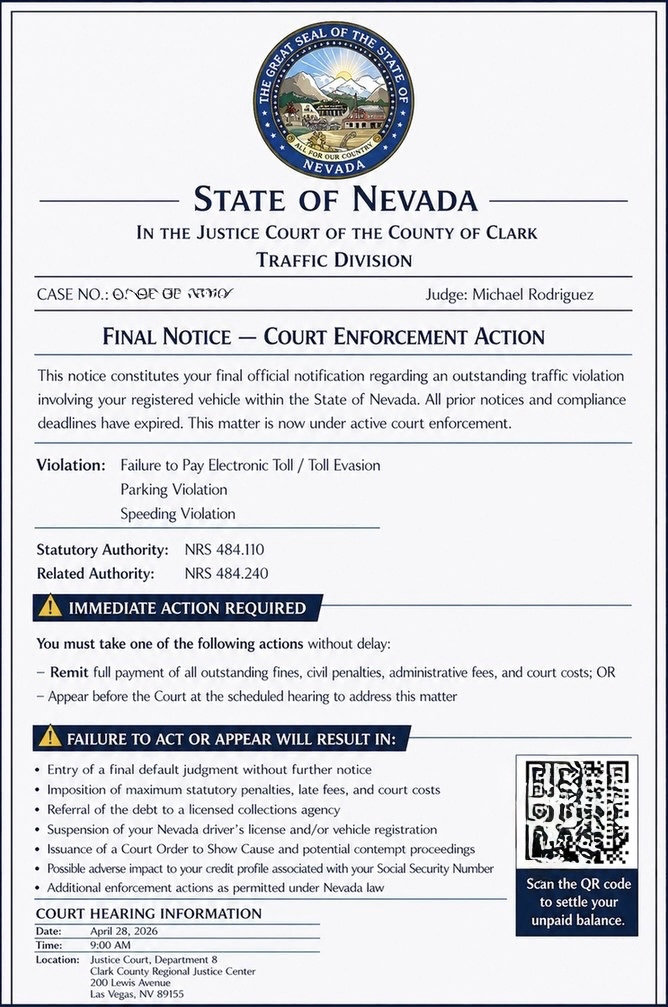
- High-fidelity cloning: the front end appeared programmatically ripped or generated to imitate an official government service with near-perfect visual fidelity.
- Judicial impersonation: formal legal styling and a fabricated judicial persona added coercive pressure to the payment request.
- Social proofing: AI-generated profiles and coordinated comments were used to make the portal feel externally validated.
4. Infrastructure: Advanced Evasion Tactics
Server-side inspection revealed deliberate cloaking logic designed to suppress the malicious experience for researchers, crawlers, and desktop browsers. The initial gateway did not directly expose the final phishing host. Instead, it behaved more like a broker, deciding whether to serve the lure and then asynchronously retrieving the next destination from a secondary API.
- User-Agent filtering: standard mobile user agents received the phishing portal, while desktop requests and recognizable crawler signatures were served sanitized responses intended to hide the operation.
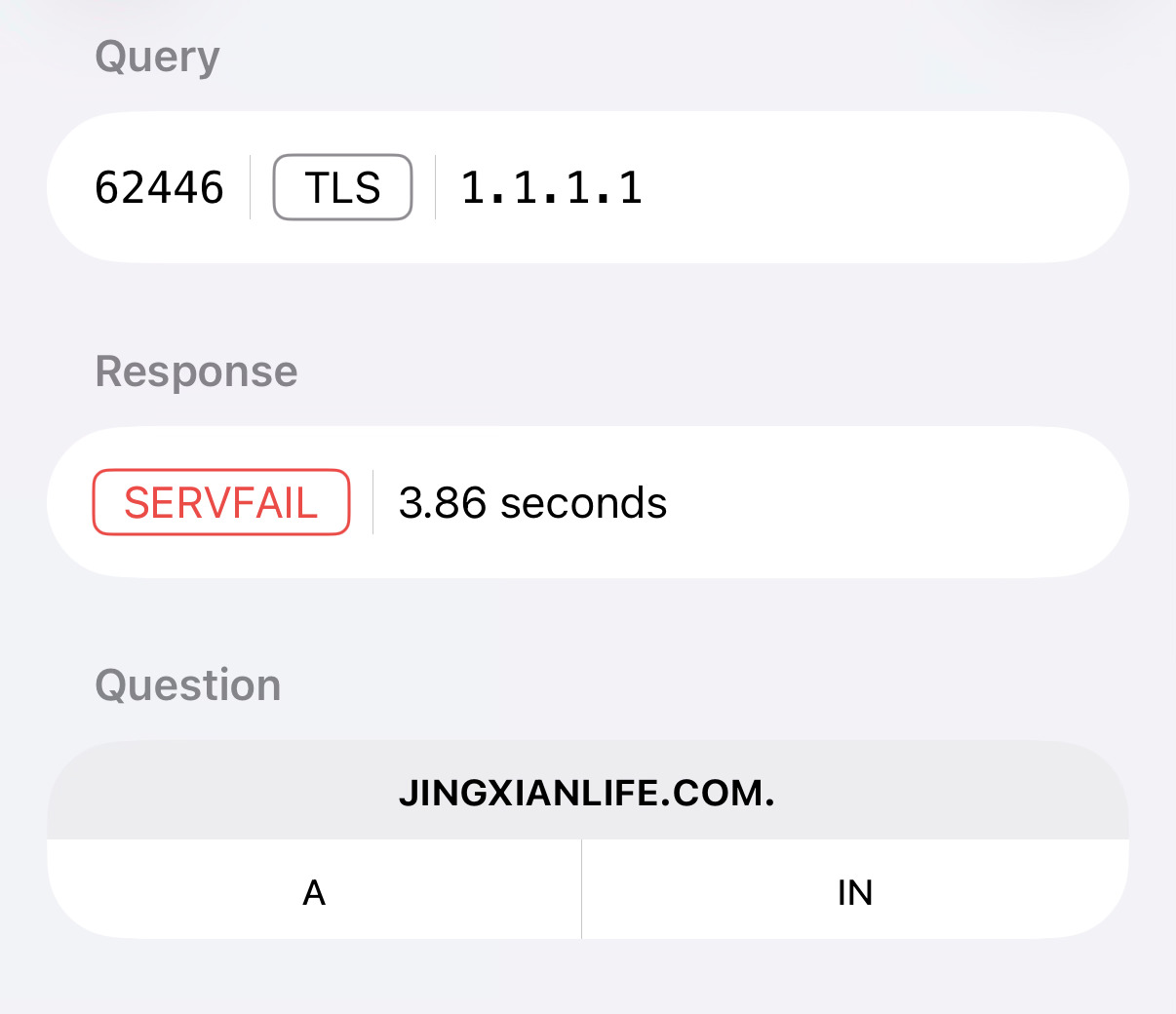
- Decoupled API architecture: the gateway at yoou.jingxianlife.com used an asynchronous POST to fetch a rotating downstream URL, allowing the operators to keep the entry point stable while rapidly swapping final payload domains.
5. Resolution and the Hybrid Threat Model
The FBI IC3 submission documented the observed API behavior, cloaking decisions, and infrastructure relationships in a way that connected the local social engineering call with the broader phishing-as-a-service footprint. On May 7, 2026, the primary domains tied to the ring were dismantled.
More importantly, the incident demonstrated a hybrid threat model: globally operated digital infrastructure paired with local intelligence collection. The attack did not rely only on broad SMS spam. It first established city- and state-specific credibility, then delivered a technically gated phishing flow that adapted to the victim's device and browsing context. That combination is what made the campaign unusually persuasive.
6. Takedown Outcome: Week of May 7
A few days after the technical report submission, the coordinated infrastructure associated with this ring was disrupted during the week of May 7, 2026. The primary domains were taken down, cutting off the campaign's active delivery path and reducing immediate exposure for targeted residents. As of the time of reporting, all known state DMV variants of this scam — including Nevada, New Jersey, and Illinois impersonation portals — have been taken down.
Public Awareness: What to Watch For
- Official channels: the DMV and Nevada courts do not initiate legal correspondence or payment requests through SMS or QR codes.
- Domain trust: official state resources use .gov domains; anything else deserves immediate scrutiny.
- Reporting: preserve phone numbers, screenshots, and URLs, then file the incident through ic3.gov.
About the Author
Tajddin Maghni is a senior software engineer specializing in security-first autonomous systems and infrastructure. He is the founder of Ergo AI, based in Las Vegas, Nevada.